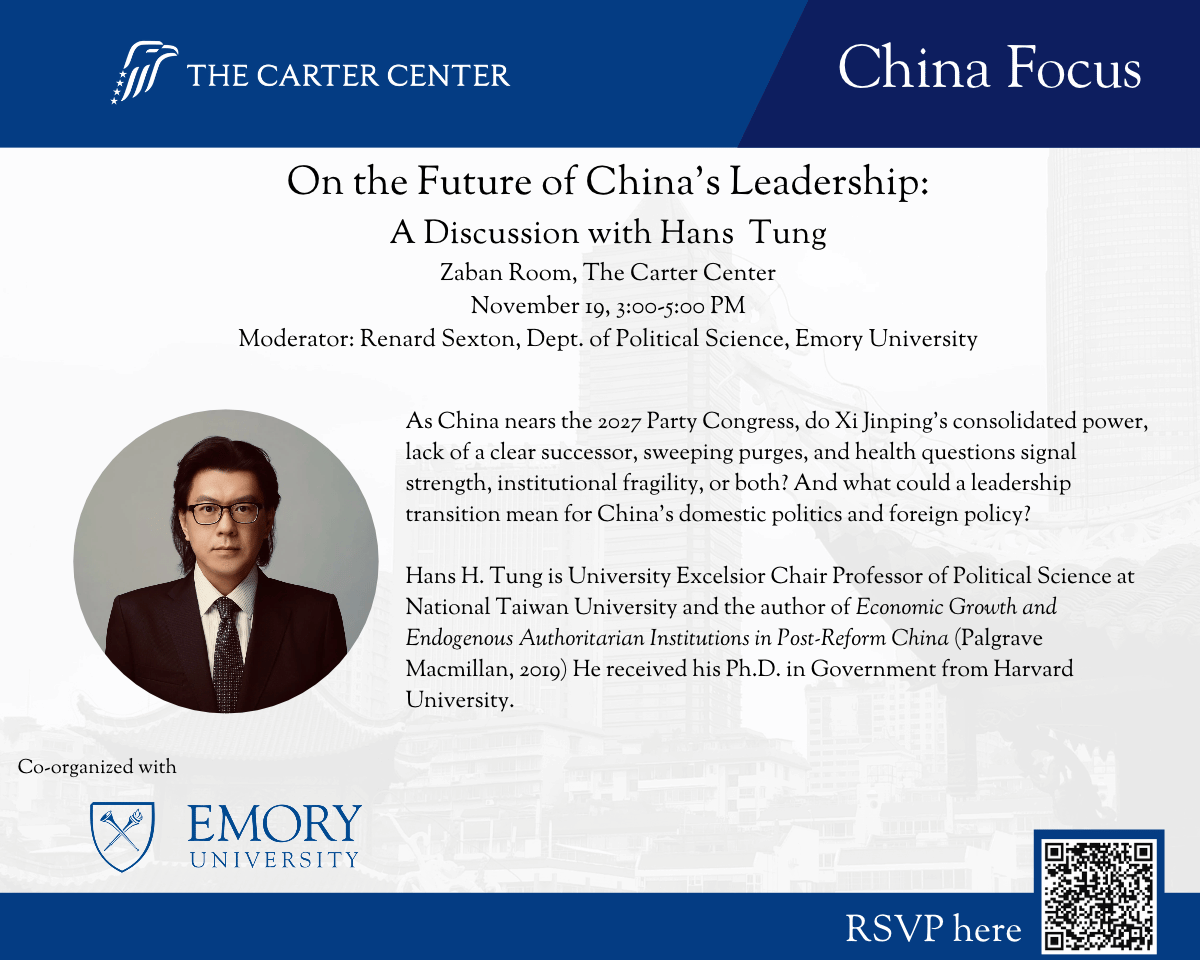

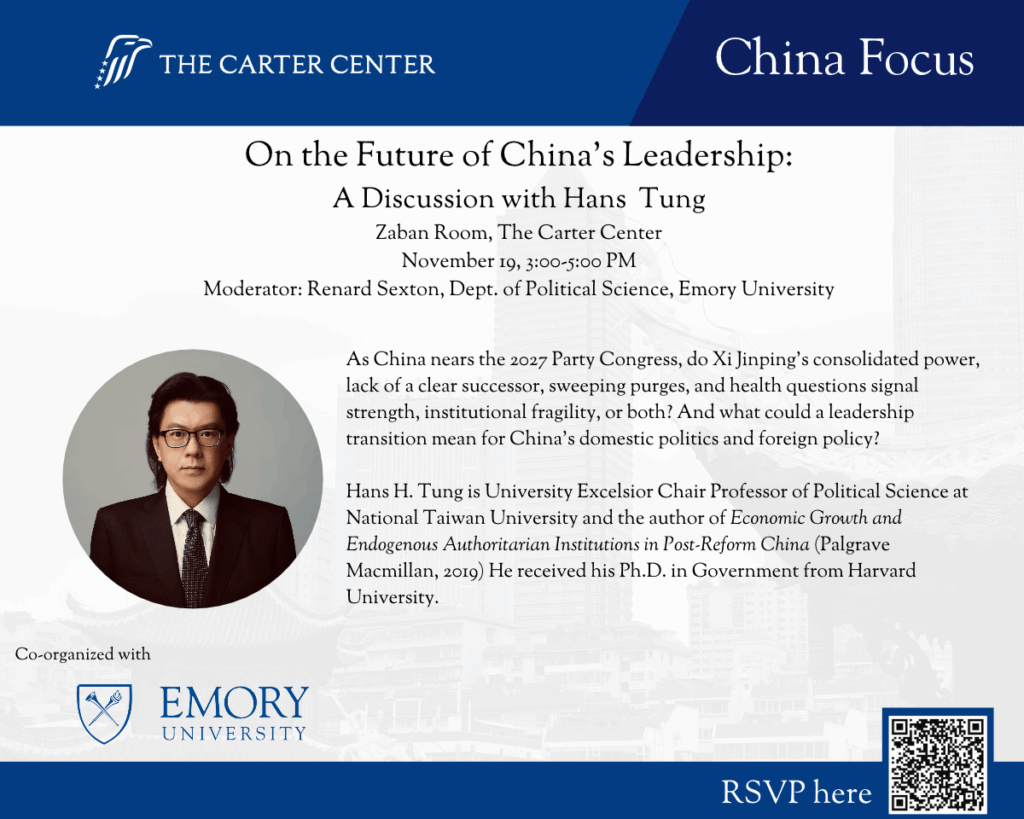
As China approaches the 2027 Communist Party Congress, questions about regime stability and political succession are becoming increasingly salient. Xi Jinping’s consolidation of personal authority, the absence of a clear successor, and recent sweeping purges of senior military and political leaders and open health questions have raised fundamental questions about the durability of China’s political system. Do these developments reflect Xi’s extraordinary strength, underlying institutional fragility, or both? And what might a future leadership transition mean for China’s domestic politics and international behavior?
Please join us for a discussion with Hans H. Tung, Professor of Political Science at National Taiwan University and a leading scholar of authoritarian politics and Chinese political institutions. Drawing on his research on elite politics, authoritarian institutions, and the political economy of China, Professor Tung will examine the dynamics shaping regime stability in Beijing and the challenges of political succession in an increasingly personalized system.
Hans H. Tung is University Excelsior Chair Professor of Political Science at National Taiwan University and a leading scholar of authoritarian politics, political institutions, and the political economy of China. His research examines how authoritarian regimes maintain power, manage elite relationships, and navigate challenges of governance and institutional change, with particular attention to the Chinese Communist Party. He is the author of Economic Growth and Endogenous Authoritarian Institutions in Post-Reform China (Palgrave Macmillan, 2019) and has published widely in leading academic journals. Professor Tung received his Ph.D. in Government from Harvard University.
RSVP here or at the link above.