
-20260514.jpg)
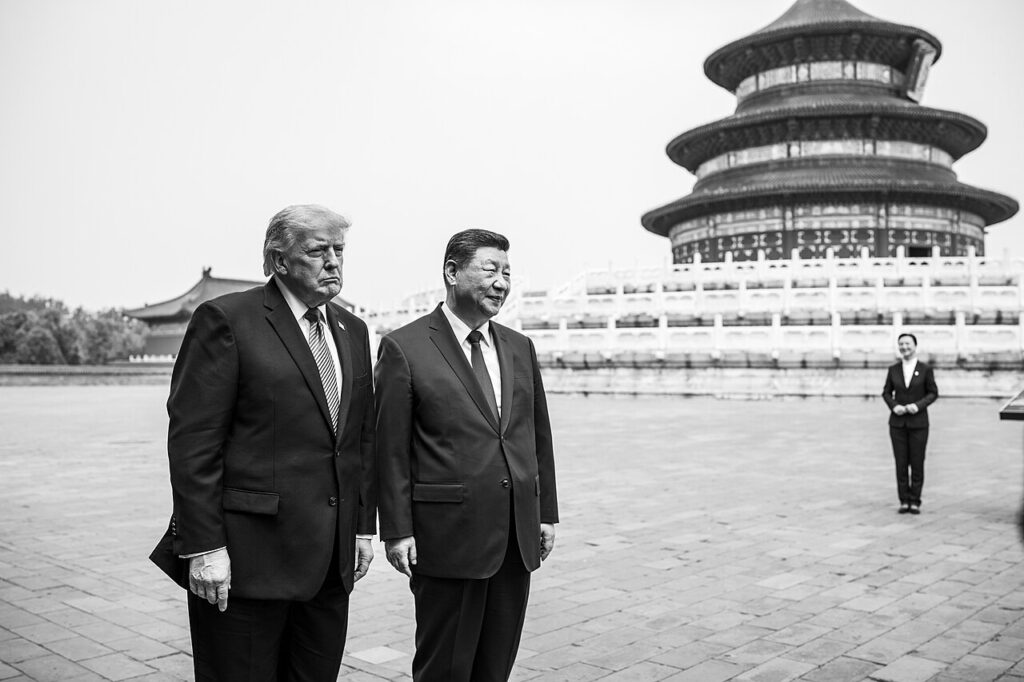
President Trump’s Beijing visit was neither the grand reset advertised by its most enthusiastic supporters nor the empty pageant dismissed by its critics. It was something more limited but effective: an effort to define a new working formula for U.S.-China relations after both sides had learned the costs of escalation.
The key phrase from the summit was not “historic deal” embedded in a signed joint declaration or a new Communiqué, although the White House naturally emphasized commercial gains, with the Midterm on the horizon. Nor was it simply Beijing’s familiar language of “win-win cooperation” or “Great Power Relations.” The more useful formulation was the new understanding described by both sides as a “Constructive Relationship of Strategic Stability.” The Chinese president Xi Jinping used that phrase in his opening remarks when greeting the American delegation in the Great Hall of the People, implying that the two countries should avoid falling into the “Thucydides Trap” in which a rising power and a status quo power would enter into conflicts. The White House, later in its released fact sheet, said the two leaders reached a consensus on issues that would “enhance stability and confidence for businesses and consumers around the world.”
Using “Constructive Strategic Stability” to describe the bilateral relations is more realistic than either side’s previous public narratives. It does not accept the harshest Washington view that China should be treated as a “pacing threat” and that the bilateral relationship must be organized around strategic competition. But it also moves beyond Beijing’s warmer cooperation-only rhetoric, which often underplays the fact that competition is now structural, durable, and not merely the product of misunderstanding in this bilateral relationship. A constructive relationship of strategic stability (on the basis of fairness and reciprocity, as the White House qualified) is not friendship. It is not a return to the Bill Clinton-era “Constructive Strategic Partnership,” but a pragmatic way to manage the most important bilateral relationship on earth.
As a result, Trump’s visit to Beijing not only produced concrete economic deals and an upcoming reciprocal visit by Xi to the U.S. in September, but also a new understanding to avoid escalation and conflict between the two powers. China will purchase 200 Boeing airplanes, with additional jet engines that could propel the Chinese-made C919 planes. American beef and soybeans will be purchased by China, a win for both the American farmers and Chinese consumers. And most importantly, the trade truce is extended, with the possibility of further reductions in trade barriers as the Board of Trade and the Board of Investment continue to identify areas not immediately pertinent to national security concerns that could benefit people of both countries.
While the readouts and fact sheets from the two countries do not have too many overlapping phrases, it is not a diplomatic failure. It is the new normal. The two governments are no longer operating in an era when broad liberalization is politically plausible, given domestic electoral or factional interests and nationalistic sentiments. What they can do is acknowledge the differences, manage competition, and collaborate on issues that remain of mutual interest. The CEOs representing American businesses in Beijing still want access to the Chinese market, and Chinese cost-effective goods and services are probably the best solution to the ramping inflationary pressures building in the American economy.
The most challenging area remains technology, and Jensen Huang’s last-minute joining the trip is a vivid demonstration of this point. Chinese firms still want U.S. semiconductors, AI-related hardware, and high-end technological inputs, but those are precisely the products Washington is least willing to treat as normal commerce, and quite a few individuals within the Trump administration were reluctant initially to bring too many tech-related CEOs alongside Trump, fearing that would leave an impression that the U.S. is no longer in a strategic competition with China. Export controls will not disappear simply because Trump and Xi spoke warmly of each other in Beijing. However, after years of tariff wars, cycles of escalations and retaliations, and export and investment restrictions, Washington and Beijing have learned the high cost of the other side’s retaliations and the leverage each holds. Each side has also learned that using that leverage too aggressively can damage its own economy, disrupt supply chains, reduce companies’ profits, and worsen economic conditions for its population, with meaningful political consequences. The relationship has entered what I have described as MAED — Mutually Assured Economic Destruction. Unlike the Cold War era of Mutually Assured Destruction (MAD), which provided stability through the fear of a second strike from the other major nuclear power, here the clarified economic consequences, such as rare earth or advanced chip export controls, would nudge leaders to think twice about escalation, thereby leading to a more stable relationship.
This is not the optimistic interdependence of the 1990s and early 2000s, in a world where globalization was still in full blossom and many believed trade would gradually soften political rivalry; it is a more dangerous yet practical kind of interdependence. The United States and China are not becoming more alike, nor is one directly dominated by the other. Their regime types are different, so are their understandings about how the world should look, and they still do not trust each other and are alerted by each other’s moves. Yet, they remain so deeply entangled that any serious attempt to rupture the relationship would impose enormous costs on both. That reality does not produce friendship. It produces caution and constructive strategic stability.
Taiwan is the sharpest test of whether this caution can hold. Here, despite his many questionable foreign policy instincts elsewhere, Trump may have gotten the Taiwan issue more right than many in the Washington policy establishment would admit. For years, the dominant American assumption has been that the best way to preserve peace in the Taiwan Strait is to arm Taiwan more heavily, push it toward “asymmetric defense” under a “Porcupine Strategy,” thus making the costs of a mainland attack intolerably high. There is logic to that argument, but it also rests on a claim that cannot truly be verified unless a catastrophe occurs.
That should make policymakers humbler than they often are. More weapons for Taiwan do not automatically lead to greater stability. They may deter, but they may also provoke, especially if Beijing reads them not as defensive preparations but as steps toward permanent separation. The danger is not only that Mainland China might one day decide to use force after it deems all peaceful means have been exhausted; the danger is that a cycle of U.S. arms transfers, Taiwanese political signaling, PLA’s military pressure to protest, and American counter-signaling to show resolve, could create an escalatory environment in which each side insists it is acting defensively and responsibly while the situation deteriorates quickly.
Beijing’s position on Taiwan is often described in Washington as if military conquest were already the settled plan, and it is just a matter of time before Beijing decides to push the button in a binary choice of war or no war. That is too simple and does not reflect reality. Although mainland China has not renounced the use of force – no sovereign country would give up that right – a variety of other options, including economic coercion, military exercises, blockades, quarantine-style operations, cyberattacks, and limited strikes of islands without civilians, and most importantly, constructive dialogues with those Taiwanese people who still follow the ROC’s constitution who see mainland China as a part of China (yes, to people in Taiwan, this would be the Republic of China), are still viable choices and scenarios. Beijing’s preferred objective remains peaceful unification, or at least preventing formal Taiwanese independence while keeping open the possibility of a political resolution on its own terms. Therefore, many PLA military actions are better understood as attempts to establish credibility, shape the bargaining environment, and signal resolve rather than as evidence that an immediate full-scale amphibious invasion of the main island of Taiwan is imminent and inevitable.
That distinction matters. If every Chinese military move is treated as a rehearsal for a future invasion, without reflecting on what might have provoked such moves, then Washington will naturally respond by accelerating arms sales and military planning. If every American move is then treated in Beijing as proof that the United States is hollowing out its One-China Policy and tolerating, if not encouraging, Taiwanese independence, Beijing will respond with more pressure. The result is not deterrence in any stable sense, but escalation without meaningful guardrails.
Trump’s handling of Taiwan during the Beijing visit was notable because he did not turn the issue into an ideological crusade or just to score points with the military-industrial complex and its related constituency; he remained calm, measured, and practical. Xi, as he had done in several previous meetings, cautioned that mishandling the Taiwan issue could push the two countries into conflict, a sharp message delivered during an otherwise friendly summit. After all, Taiwan is Beijing’s core interest, but not the U.S.’s. Trump appeared willing to hear Beijing’s red line without publicly turning it into a test of American resolve and credibility. This shows restraint. And restraint is badly underrated on the Taiwan issue.
Compared with former President Biden’s occasional faux pas that move away from the U.S. long-standing “One-China Policy,” in which his White House team had to come out to reiterate that the U.S. policy on Taiwan has not changed, Trump’s approach so far has been more transactional, ambiguous, and therefore potentially less combustible. Strategic ambiguity has long worked not because it satisfies everyone, but because it denies everyone full certainty. Beijing cannot be sure what Washington would do in a crisis. Taipei cannot be sure it has a blank check from the U.S. Washington retains room and flexibility to maneuver. That ambiguity is not a defect, but the mechanism that has helped prevent disasters for more than half a century.
Trump’s contribution, at least during the Beijing visit, was to lower the temperature. He did not present Taiwan as a stage for a civilizational struggle, nor did he appear eager to bind the United States to a rigid commitment that would reduce presidential flexibility. He treated Taiwan as one difficult issue within a broader relationship that also includes trade, technology, investment, military risk, Iran, Russia, and global economic stability. That is more pragmatic and realistic than much of Washington’s current Taiwan discourse allows.
There is an important caveat. Trump, more recently, has indicated that he may speak directly with Taiwan’s current leader, Lai Ching-Te, a move that would break with long-standing diplomatic protocols and could sharply raise tensions if handled carelessly. If that happens in a performative or poorly managed way, the stabilizing logic of the Beijing visit could weaken quickly. But the visit itself showed that Trump, unlike some China hawks around him, still sees value in de-escalation and leader-level bargaining. And if the purpose of Trump’s call to Lai is to explain why arms sales at the previous level would no longer be sustainable, and the U.S. will need to get back to the Third Communiqué signed with Beijing on August 17, 1982, which states that “The United States…intends gradually to reduce its sale of arms to Taiwan, leading, over a period of time, to a final resolution,”[1] Beijing might see this as a positive outcome, publicly denouncing the phone call to object to the direct communication between an American leader and a Taiwanese leader in office, but potentially praising the act of halting arms sales through diplomatic channels.
This is why “constructive strategic stability” is analytically useful. It acknowledges that the two countries will compete, but that competition should not be allowed to define the entire relationship. The concept captures the practical bargain now emerging: neither side trusts the other, but both sides have reason to prevent the relationship from becoming uncontrollable.
The significance of Trump’s Beijing visit should not be overstated. It did not solve the central contradictions in U.S.-China relations; It did not end the technology war; It did not erase tariffs; It did not remove the Taiwan danger; It did not restore the political optimism of an earlier era. However, it did mark a shift in operating logic between the two countries. Washington is no longer, at least for the moment, pushing an exclusively competition-first framework in which every economic tie is treated as a vulnerability and every Taiwan-related signal is treated as an opportunity to prove resolve. Beijing, meanwhile, has had to acknowledge in practice that a “win-win” cooperation cannot simply be declared into existence while major conflicts remain unresolved. Both sides are moving, unevenly and reluctantly, toward a middle position of strategic competition constrained by economic interdependence, leader-level management, and mutual fear of escalation.
That may sound uninspiring, but in the current China-U.S. relationship, it is a meaningful achievement. The goal should not be to pretend that rivalry has ended and everything is rosy and hopeful. It should be to prevent competition and differences from becoming war. Trump’s Beijing visit did not produce a new era of trust, but it produced something more plausible: a fragile, transactional, and still contested framework for coexistence.
For now, that may be the best available form of peace.