
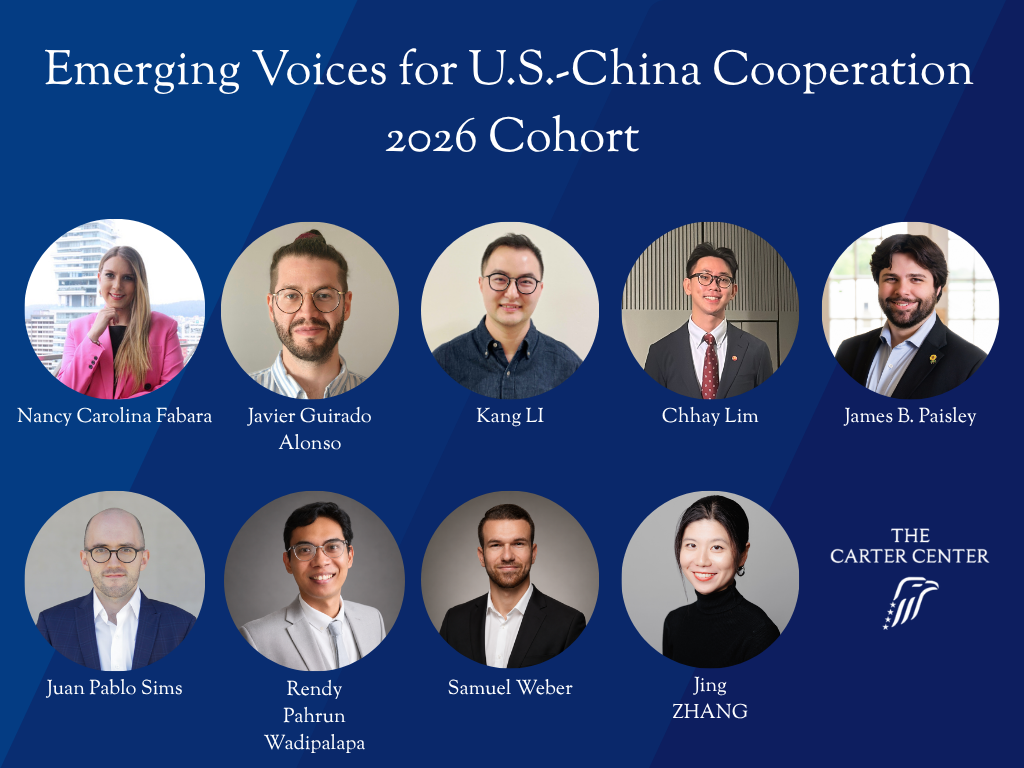
The Carter Center is proud to announce the 2026 Emerging Voices for U.S.-China Cooperation cohort.
Emerging Voices is an early career conference for U.S.-China specialists from across the globe organized by The Carter Center and the Academy of Contemporary China and World Studies. Each year, our competitively selected cohort participates in a one-day conference with senior experts on U.S.-China relations, alternatively held in the United States and China, presenting research and joining in multilateral people-to-people exchange. The conference is followed by several days of round tables and events with university faculty, policy experts, and business leaders. Our goal is to provide a rare platform for scholars and policy professionals committed to advocating for international peace and a new paradigm for U.S.-China relations based on mutual benefit globally.
This year, the week of events will kick off with a conference at Nanjing University on August 31st on the theme Globalization After Globalization: Geo-economics and the Prospects for Peace.

Nancy Carolina Fabara
Assistant Professor, Sun Yat-sen University & International Business Consultant
Carolina Fabara is an international lawyer, arbitrator, mediator, researcher, and educator advancing sustainable and inclusive global cooperation. She is Founder of CrossFrontier Legal Consulting and Umalliq NGO, and leads the Red de Innovación in Ecuador. As an Assistant Professor at Sun Yat-sen University and lecturer at Universidad Espíritu Santo, she teaches international treaties, investment law, and global economic governance. Her work bridges Latin America, China, and Europe, focusing on green transitions, Indigenous rights, women’s leadership, and equitable development through international law.

Javier Guirado Alonso
Lecturer, Department of History and Philosophy, Kennesaw State University
Javier Guirado Alonso is a Lecturer of World History at Kennesaw State University, in Atlanta. He holds a PhD from Georgia State University and an MA in Middle East Studies from the Autonomous University of Madrid. He studies how oil and solar energy have made the Arabian Peninsula a crucial node of global interests. Javier has contributed to research projects and delivered talks across the United States, the United Kingdom, Europe, the Middle East, and China. His work has been featured in publications like Foreign Affairs, BBC Mundo, and the Journal of Arabian Studies, and he is currently writing his first book. He speaks English, Spanish, French, and Arabic.
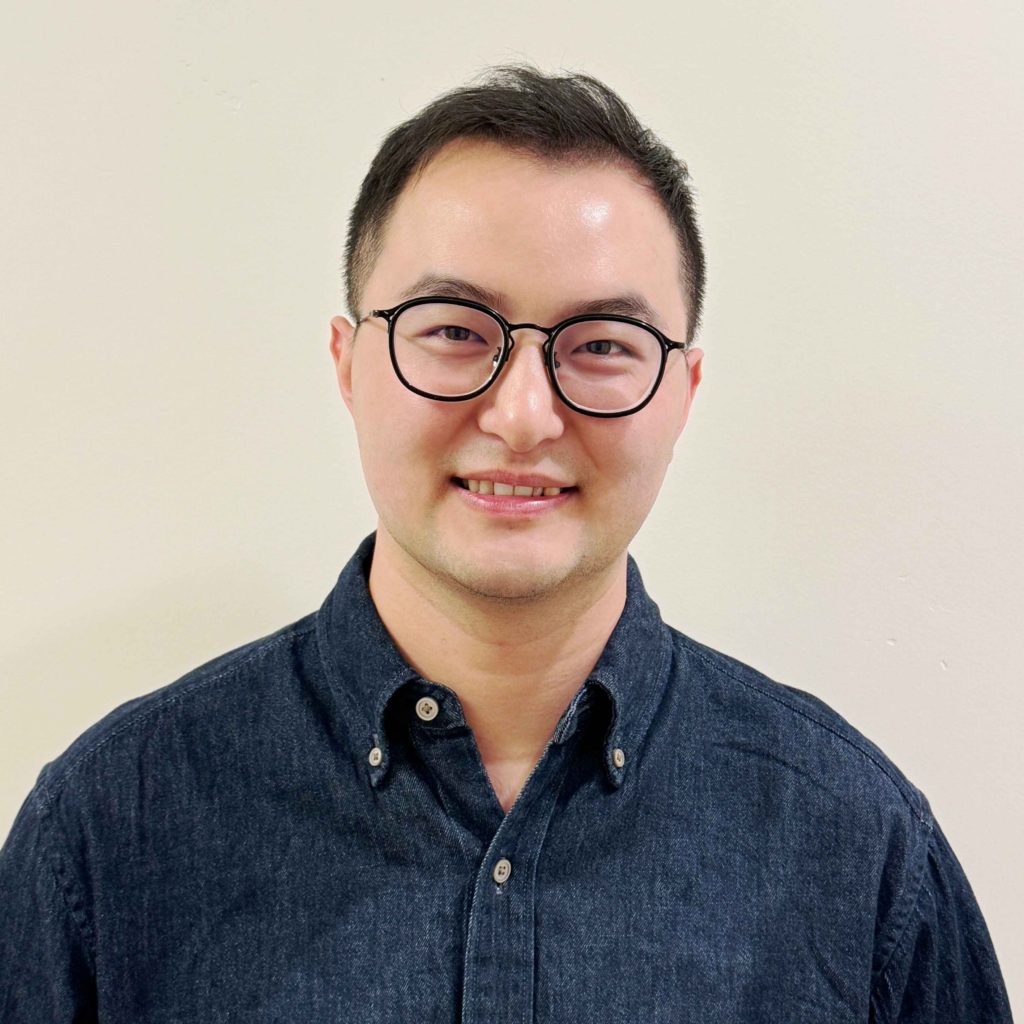
Kang LI
PhD candidate in Geography, University of Utah
Kang Li is a PhD candidate in the School of Environment, Society, and Sustainability at the University of Utah, and a Visiting Researcher at the Institute of China Studies, Universiti Malaya (2026–2027). His ongoing research examines China’s involvement in urban and industrial development across Malaysia. He has degrees in Sociology from Sun Yat-Sen University and City Planning from University College London. Prior to his doctoral studies, Kang worked as a consultant supporting Chinese overseas development initiatives in Angola and Morocco, partnered with leading Chinese state-owned construction and engineering enterprises.
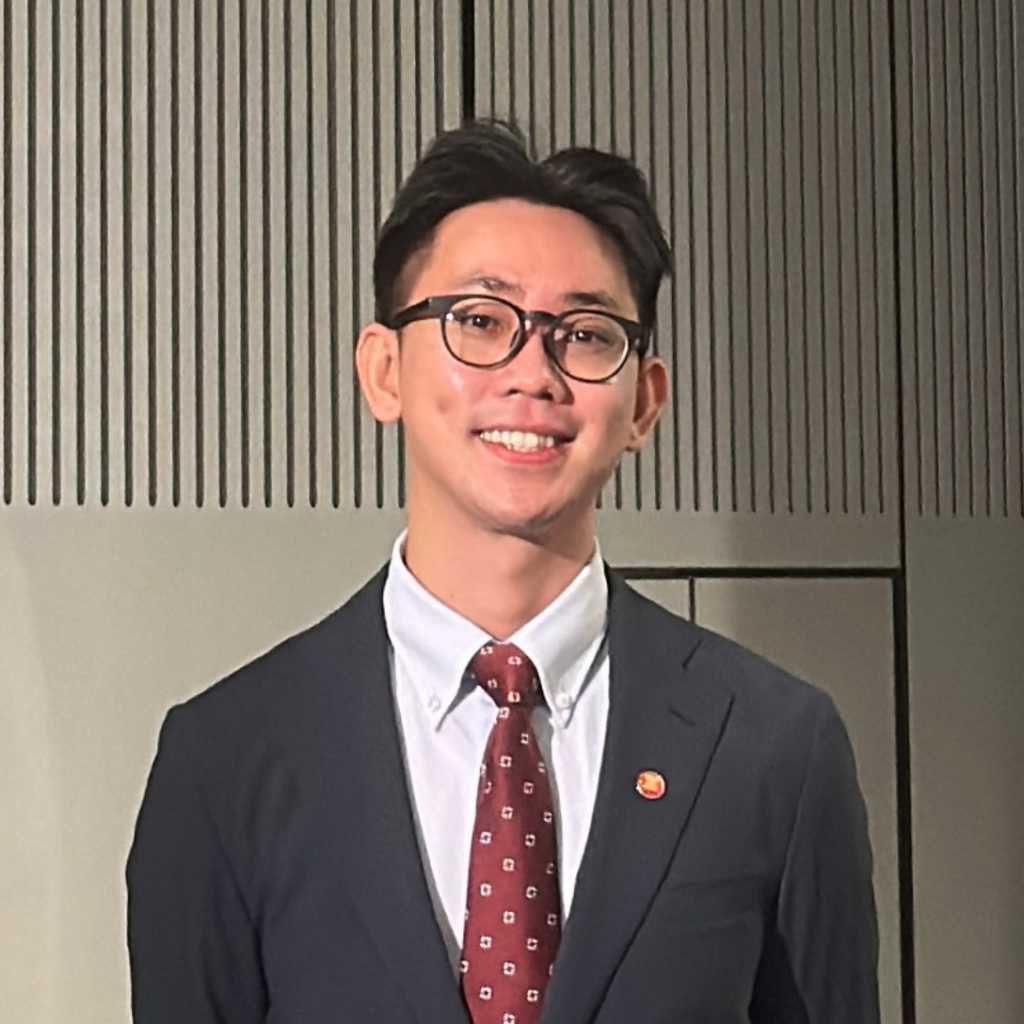
Chhay Lim
Deputy Director, Center for Southeast Asian Studies, Royal University of Phnom Penh
Chhay Lim is a deputy director at Center for Southeast Asian Studies, Institute for International Studies and Public Policy at the Royal University of Phnom Penh. He was a Fulbright Visiting Scholar at Elliott School of International Affairs of the George Washington University.
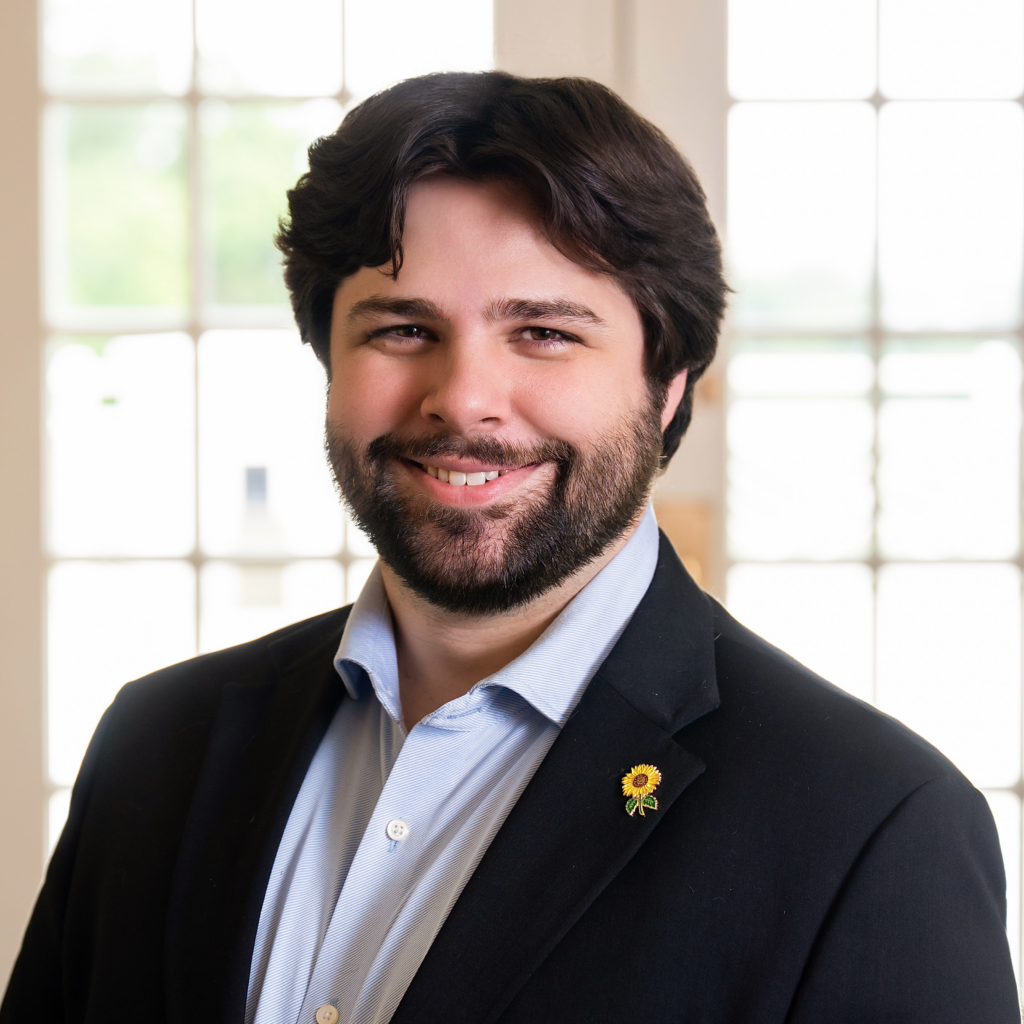
James B. Paisley
Senior Associate, Asia Pacific Focus, The Soter Group
James Paisley is a professional in geopolitical risk and emerging technology policy. Previously, he led Indo-Pacific cyber policy at the Department of Homeland Security’s Office of Cyber, Infrastructure, Risk, and Resilience. James coordinated the Department’s international activities and priorities across components on issues at the nexus of cybersecurity, emerging technology, and critical infrastructure resiliency. Prior to joining DHS, James worked in the private sector in Trust & Safety to promote cyber workforce development and cybersecurity education. A 2015 Boren Scholar to China, James speaks Mandarin and Japanese and received his master’s in international Affairs from the School of International and Public Affairs at Columbia University.
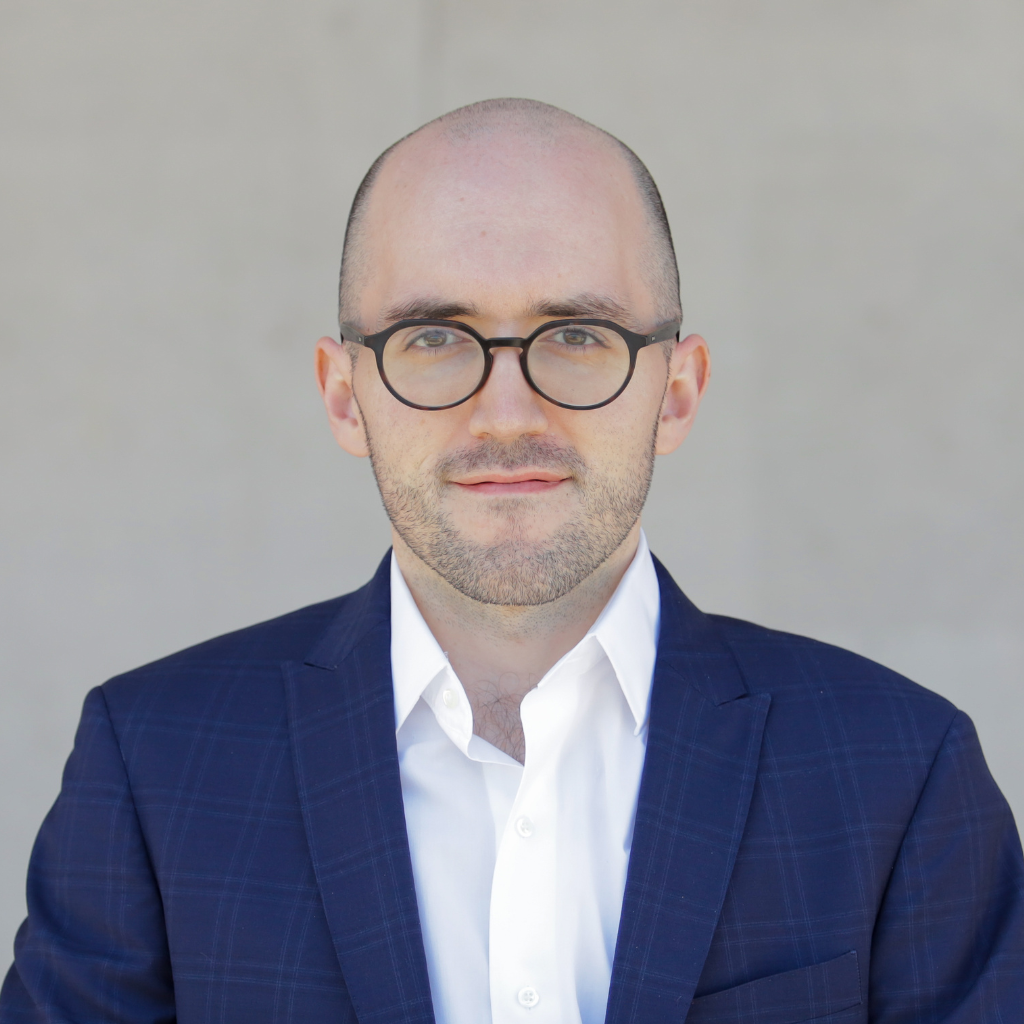
Juan Pablo Sims
Assistant Professor, Faculty of Government, Universidad del Desarrollo (Chile)
Juan Pablo Sims is an Assistant Professor at Universidad del Desarrollo (Chile). He holds a PhD in International Politics from Fudan University and an MA in International Relations from the University of Melbourne, and previously served as a foreign policy advisor at Chile’s Ministry of Foreign Affairs. His research examines China–Latin America relations, the Belt and Road Initiative, BRICS expansion, and how middle powers pursue autonomy amid great power competition. He is co-author of Latin American Strategic Autonomy Towards China (Routledge).
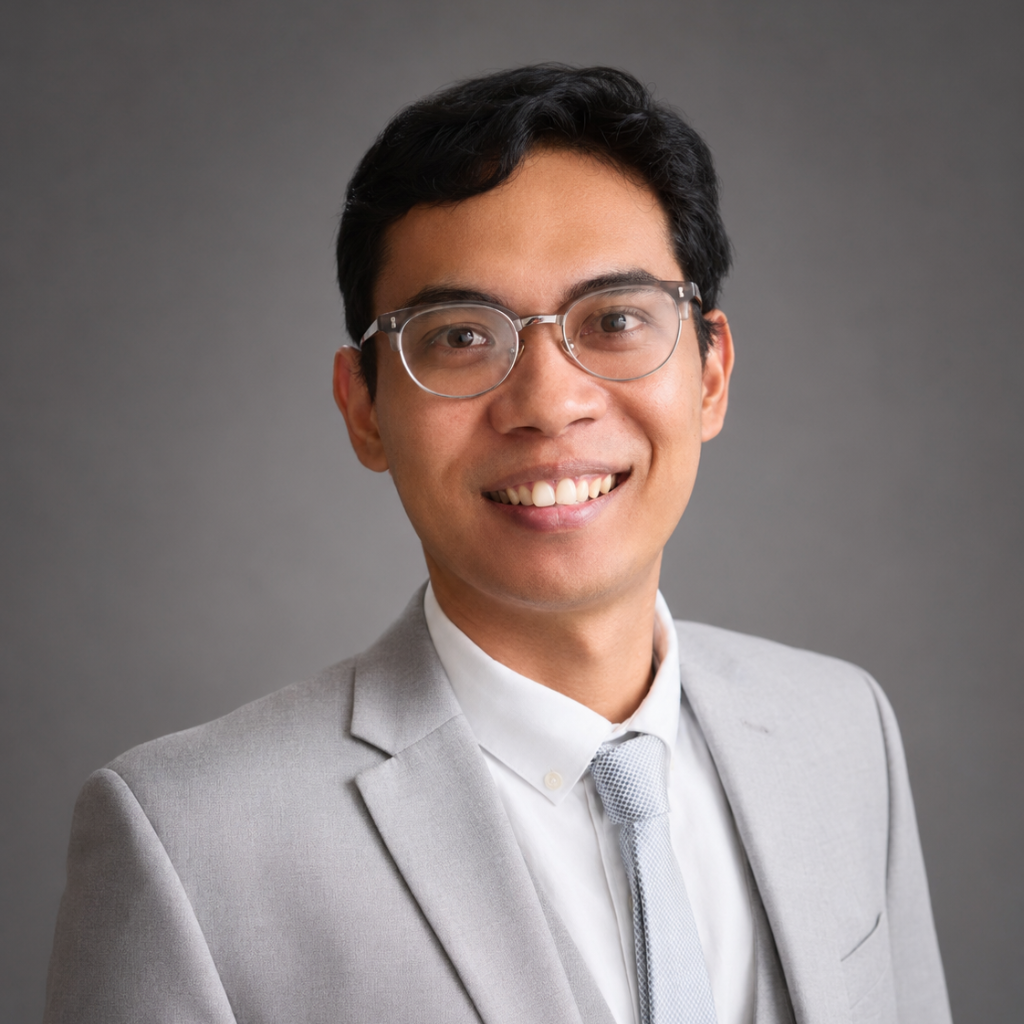
Rendy Pahrun Wadipalapa
Researcher, National Research and Innovation Agency (BRIN)
Rendy Pahrun Wadipalapa is a Researcher at Indonesia’s National Research and Innovation Agency (BRIN), specialising in Southeast Asian politics, democratic regression, and extractive governance. He holds a PhD in Politics and International Studies from the University of Leeds (2022). His scholarship appears in Globalizations, Asian Survey, Journal of Democracy, Pacific Affairs, and Contemporary Southeast Asia, among others, examining Indonesia’s authoritarian turn, political dynasties, and energy transition. His current research examines how Southeast Asian states navigate US-China strategic competition and the politics of selective economic recoupling
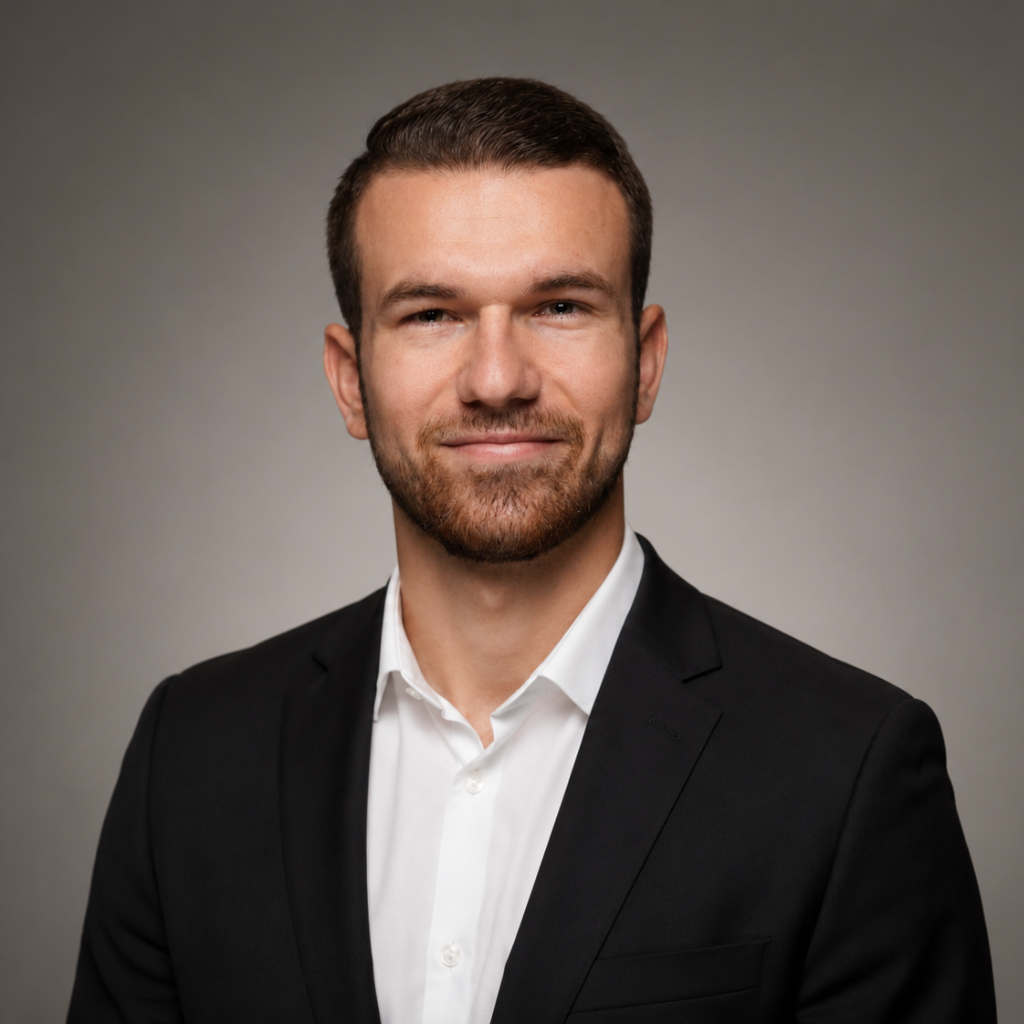
Samuel Weber
Policy Analyst, European Guanxi
Samuel Weber is a policy analyst focusing on EU-China economic relations and Chinese industrial policy. He holds a BA in Political Science, History, and Chinese Studies from Heidelberg University, where his thesis examined adaptive learning in China’s Belt and Road energy investments in Southeast Asia. He writes on European-Chinese relations for European Guanxi and has studied at Shanghai Jiao Tong University. His current research explores how Western de-risking strategies reshape transnational economic linkages rather than severing them. He begins an advanced Chinese language program at Beijing Foreign Studies University in September 2026.

Jing ZHANG
Research Fellow, SOAS University of London
Jing Zhang is a Research Fellow at the Centre for Sustainable Structural Transformation (CSST) at SOAS University of London. She joined CSST after completing her PhD in Development Policy at University College London. As a development political economist, her main research interests are in the areas of urbanization and industrialization, infrastructure development, global China and South-South Cooperation. Prior to her position at CSST, she worked at the Development Planning Unit of UCL (London) and China Development Research Foundation (Beijing), with experience spanning research, teaching, and policy engagement.