Since Xi Jinping’s inauguration in 2013, we have increasingly seen dissidents and academics accused under the broad charge of “historical nihilism.” But what does the term really mean? What forms of historical inquiry are permissible, and which are to be rejected? Why does the Party consider it such a pressing concern, and how is it connected to other frequently invoked concepts such as “foreign infiltration” and “cultural confidence”? Dr. Mittelstaedt offers an incisive account of the term’s history, meaning, and significance to the Chinese state and its vision of China in the world today.
Professor Jean Christopher Mittelstaedt is a political scientist specializing in the politics of China. He earned his BA in International Politics from the School of International Studies at Peking University in 2014 and completed his master’s degree in international Affairs at the Paris School of International Affairs (Sciences Po) in 2016. He received his DPhil (PhD) in politics from the University of Oxford in 2019 with a dissertation analyzing China’s 1975 state constitution, undertaken at the Department of Politics and International Relations. During this time, he also conducted extended research at East China Normal University in Shanghai.
Jean Christopher Mittelstaedt is Professor of Modern Chinese Studies and Chair of Modern Chinese Studies at the University of Zurich. He previously held positions at SOAS, University of London, and the University of Oxford. His research focuses on the ideological and institutional foundations of Chinese Communist Party rule, with particular attention to party governance and cultural governance. His work has appeared in The China Quarterly, Modern China, Asian Survey, and China Information, among others. He teaches core courses on Chinese politics, international relations, law, governance, and ideology and contributed lectures and seminars to modules on modern Chinese history, political economy, comparative authoritarianism, and political analysis at both undergraduate and postgraduate levels.
Alice Liu: Professor, can you briefly define the term “historical nihilism” for our readers? What does it mean, and why did it come to your attention?
Christopher Mittelstaedt: I’ve been teaching Document No. 9 from 2013, the document that set out constitutionalism and liberal democracy as threats to the Chinese Communist Party for a few years, so I was aware that the term existed within party-state discourse. But it really only came to my attention in December 2024, when I started doing research on foreign hostile forces in the wake of Jiang Zemin’s death, who died in November 2022. Later, there was a document in Study Times, the CCP’s Party School journal, on historical nihilism and it being a problem in terms of AI-generated videos and content. I started digging into this concept and quite quickly became immersed and fell down a rabbit hole.
What I realized very quickly is that there’s no clear definition for historical nihilism. If you look at the party’s usage of historical nihilism, it’s a label that could theoretically apply to anything, any account of the past that departs from the party-state-sanctioned narrative. It’s not a doctrine in that sense. It is not something where an individual would say, “Oh, I’m now conducting historical nihilism,” or “I’m writing a piece of work that is historically nihilist,” or anything like that. No individual would say that. Instead, it’s a label that’s almost exclusively used by the party-state to denounce certain narratives of the past.
Chinese historian Guo Shiyou, whom I also cite in my article, observed that the targets of historical nihilism are so vague that it could really be applied to anything or anyone. So what we analyze when we’re looking at historical nihilism is how this accusation has evolved and who is described by the party-state as a historical nihilist. For example, some scrutinize official textbooks and revolutionary orthodoxy. Others emphasize the positive impact of Western imperialism and challenge established revolutionary narratives, denounce Communist heroes, and question both the accuracy and morality of their actions.
Some also advocate for controversial figures like Li Hongzhang and Yuan Shikai, arguing that they were good people and that not everything they did was negative. A lot of this appeared in blog articles and a few books. Most of the discussion dates back to the 1990s and the early 2000s.
Generally, though, the argument was that these figures had a more positive historical impact than the official narrative allowed. For example, they were described as promoting modernization, Westernization, liberalism, or democratic reforms, and those developments were viewed positively. So the argument was that Li Hongzhang or Yuan Shikai wasn’t simply a traitor or evil remnant of the feudal system as portrayed by the Communist historiography. Instead, they were figures who made positive contributions and whose reputations had been sullied by Chinese Communist Party historiography.
Basically, until the late 2000s, there was no real definition of what historical nihilism really is. It was kind of grouped under wholesale Westernization as a threat to the Chinese Communist Party. Wholesale Westernization, admiration of foreign cultures, and historical nihilism were really grouped together, whereas other types of nihilism were defined. What it boils down to is a charge that is used by the party-state, leveled against historical claims that deviate from whatever line the party-state deems to be the sanctioned line.
AL: Fascinating. In the paper, you argued that historical nihilism today has become a political technology. Can you say more about that? What did you mean by it?
CM: So before, roughly 2013 and 2014—it’s hard to put a real date on it—historical nihilism was more like a rhetorical device. Mostly it was used in academic discourse. There were, of course, also leaders within the Chinese Communist Party who used it in certain ways, but before 2013, it really had no policy relevance and no institutional consequence. That’s the major change. After around 2015, it became a tool to discipline discourse and administer sanctions. It was not just rhetorical anymore; now it was administrative as it entered law. While not explicitly entering a legal text, there could be a charge within the courts that you were a historical nihilist by questioning historical portrayals, and then you could end up in prison or face fines.
Historical nihilist discourse was purged from textbooks or censored on the internet. It became a dispersed but coordinated mechanism across various spheres, such as cyberspace, education, and law. It’s really the difference between an insult and an administrative switch with actual consequences. After 2013, when someone was described as a historical nihilist, it could produce bureaucratic, legal, and administrative consequences.
AL: You said that after 2013, the Party shifted from narrating history to governing the possibility of it. Could you elaborate on what this distinction means?
CM: For the most part, party history was narrated. There was an authoritative story, and there were contested rival stories within the Chinese Communist Party, for example, between different lines within the CCP. But this terrain was relatively open and periodically rewritten. That’s why we have the History Resolutions of 1981, for example, which acknowledged Mao’s errors but insisted on the overall correctness of his legacy.
But governing the possibility of history is very different. What this means is fixing in advance what history can be, who may speak, and how it might be spoken. Here, deviant accounts are not rebutted by different lines or by other people. They become impossible to even talk about, impossible to come into existence in the first place. That’s basically what this means. You can look at different spheres, for example, law, Party discipline, education, and cyberspace, where this possibility of the past is being governed in different ways.
AL: Can you walk us briefly through the history of this term, tracing its emergence under Mao, through Deng, and up until the early 2000s?
CM: Mao used the term “nihilism,” but he never used “historical nihilism.” It didn’t generally exist back then, certainly not at the leadership level. He listed nihilism as one of the petty bourgeois tendencies that Marxism was supposed to eradicate and destroy. So it wasn’t really that important. No one really talked about it except during the Cultural Revolution, when it came up a little bit, but it always appeared together with other types of nihilism, for example, cultural nihilism or national nihilism. During the Cultural Revolution and even in the 1950s, these terms were used almost interchangeably. For example, denigrating traditional Chinese medicine was considered a form of national nihilism or cultural nihilism, moving in the direction of what would later become historical nihilism.
The term “historical nihilism” was first used by Chen Yun in 1978 when he talked about the Cultural Revolution as a form of historical nihilism in the context of neglecting China’s traditional literary forms and artistic heritage. It wasn’t about history per se. It was about literature, artistic heritage, opera, and those kinds of things. It was, of course, a response to Mao’s wife, Jiang Qing, and the destruction of culture during the Cultural Revolution. At the same time, other people were discussing the same phenomenon but labeling it cultural nihilism rather than historical nihilism. It referred to the excesses of the Mao period, really, and nobody quite knew what it meant.
The term only came back in the late 1980s, in the wake of Tiananmen, when leaders invoked historical nihilism alongside other catchphrases such as bourgeois liberalization and wholesale Westernization. That was in response to the Tiananmen protests and the events leading up to them. But there was still no clear definition. It was only a rhetorical charge levied very broadly against what they perceived to be Westernized students, Westernized intellectuals, and Westernization in general, which they saw as detrimental to China.
Throughout the 1990s, the term popped up occasionally, but it didn’t really have much impact. It appeared in scattered responses, for example, to the 1995 book Farewell to Revolution, which returned to the origins of the Chinese Revolution and challenged established narratives while expressing support for liberal democracy and constitutionalism. But during the 1990s and early 2000s, historical nihilism was not really a concept that anyone took too seriously.
That only changed in the late 2000s, around 2008. This is when historical nihilism came back in a major way and was identified by the leadership as an increasingly serious problem in the intellectual sphere. The turning point really came in the late Hu Jintao period, when Party School scholars linked Chinese historical nihilism to the fall and dissolution of the USSR. What’s interesting here is that all of this happened under Xi Jinping’s tutelage, who was president of the Central Party School during this period. He also chaired one of the major meetings on Party history in 2010. He was already very invested in these issues even before he became CCP general secretary.
To the extent that history was being tried by scholars or intellectuals, there were some incidents during the noughties, but none of them were described as historical nihilism at the time. That only happened years later. For instance, in 2006, authorities suspended the Freezing Point, a supplement to the China Youth Daily, after it published a critique of nationalist textbook narratives. The charge was that the article, by challenging textbook treatments of the Boxer Rebellion and the Taiping Rebellion, distorted history and harmed national feelings. Notably, the language of historical nihilism was absent from the official condemnation at the time, though years later, this would be described as an example of historical nihilism. So, the historical nihilism we talk about today is very much a new term. The term was not in use in that way at the time.
AL: So that was the early 2000s. How was the term transformed under Xi? Did you find a particular policy or event that signaled to you that it was markedly different from the discourse of the 1990s and 2000s?
CM: Yeah. There were a couple of events that we can pinpoint. One, of course, is Xi Jinping’s widely cited speech from early 2013. It was only published in 2019, where he talks about the disintegration of the Soviet Union. He asks, why did the Soviet Union dissolve? Well, it was because nobody cared about Lenin and Stalin anymore, and he mentions historical nihilism and the ideological sphere. The “complete negation” of Soviet history and the “negation of Lenin and Stalin” had “confused the people” and disintegrated the Party’s capacity to act, he said. The Soviet Communist Party lost control because it couldn’t govern the ideological sphere anymore.
The second point was another meeting in summer 2013, a major meeting of propaganda chiefs over which Xi Jinping also presided. We still don’t have access to the full speech that he gave, but we have snippets and fragments of it. In it, he talked very clearly about what was codified as Document No. 9 in April that year, which was leaked and considered one of the most important and interesting documents of Xi Jinping’s tenure. It warned against historical nihilism alongside universal values, constitutionalism, Westernization, and ideological perils that had to be combated. So those are the three major events in 2013.
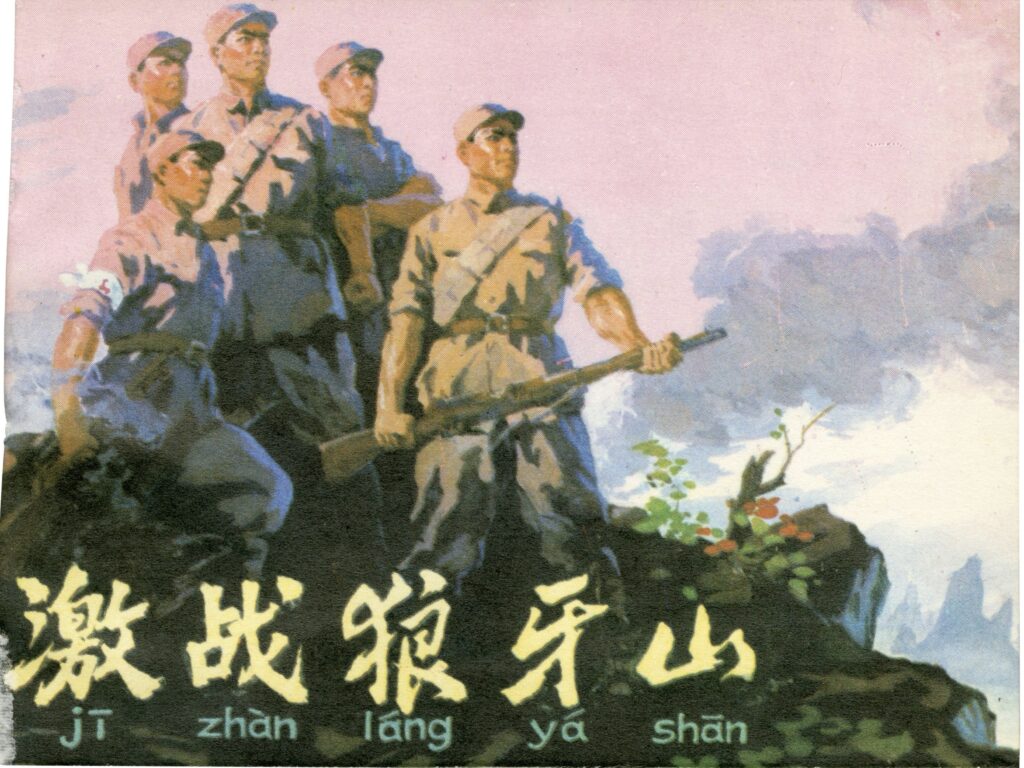
But I think what really drove this and helped codify it was another incident that also happened in 2013, involving the liberal magazine Yanhuang Chunqiu. Historian Hong Zhenkuai published an article questioning the myth of the Five Heroes of Langya Mountain. This was a story from 1941, in which five Eighth Route Army soldiers volunteered for a suicide mission to provide cover for retreating troops. To avoid capture by Japanese forces, they jumped off a cliff after reportedly killing dozens of Japanese soldiers. These were celebrated as the Five Heroes.
The historian went to the site, examined the evidence, and questioned whether the event had actually happened in the way it had been portrayed in the official narrative. In the article, Hong cast doubt on the number of Japanese casualties and the plausibility of the heroes’ final stand. This resulted in public criticism and ultimately led to legal action by a hero’s family. The lawsuit was supported by the PLA and by the Chinese Communist Party. Eventually, I believe in 2016, the court ruled against Hong, finding that his articles had infringed the heroes’ reputation and honour.
From 2017 onward, this increasingly became a legal issue. Historical nihilism entered the legal framework. We had the 2018 Heroes and Martyrs Protection Law, for example, which protects Communist and revolutionary heroes. We also saw distorting Party history become part of the Chinese Communist Party’s disciplinary system. If you are a Party member, you are obligated not to disrespect Party history, and if you do, you can be punished under these rules. We also saw new regulations regarding Party history education and related areas.
This event also contributed to the eventual closure of Yanhuang Chunqiu. It sent an enormous chilling effect through the historian circles. Historian Yin Hongbiao, for example, described it as a deterrent for historians studying China’s past, especially when it comes to publishing anything that might “expose or explore negative facts in history.” That was really the broader significance of the case.
By 2021, the law was being applied punitively. Luo Changping, a former journalist, was sentenced to seven months in prison after he questioned the glorified portrayal of the Ice Sculpture Company in the blockbuster war film The Battle at Lake Changjin. Luo’s post, framed as a critical reflection on war and propaganda, was treated as an insult to national heroes. He was compelled to issue public apologies and pay 80,000 yuan to a Korean War memorial.
AL: How central is the Soviet Union’s dissolution to Xi’s understanding of historical nihilism? And to what extent is this campaign against historical nihilism driven by genuine ideological conviction? Or is it mostly concern over the regime’s stability?
CM: I would think that Soviet collapse is not decorative or performative. The existential angst over the Soviet Union’s collapse is very much driving this whole thing, to the extent that it goes beyond historical nihilism. There’s one line of argument that describes Xi Jinping’s entire tenure as a response to the existential anxiety created by the Soviet Union’s collapse. At the same time, if we just look at historical nihilism, the speech where Xi links it to the Soviet Union wasn’t his invention. We have Party scholars making that connection before Xi, so he was presumably aware that these ideas were already linked together. But I would think the lesson that is drawn is really causal, not just illustrative.
Historical nihilism is genuinely treated as something that killed off the USSR. That’s why it must be fought, and that’s why the response must be both destructive and constructive—by which they meant two policy lines that deal with this. One is destructive, including censorship, legal regulations, and other restrictive measures. You tell people what not to say and what not to believe, and you draw a boundary around acceptable discourse.
At the same time, there’s the constructive side, where you tell people what to believe and understand as the correct version of history. Under this constructive approach comes the autonomous knowledge system of historiography, new ideas in archaeology, the 2021 History Resolution, revisions of historical textbooks, and much more. These are two policy lines with the same prophylactic aim: to avoid the kind of collapse that happened in the Soviet Union.
AL: What does this evolution of historical nihilism tell us about the party-state’s pursuit of epistemic sovereignty in the contemporary era?
CM: That’s a good question. Epistemic sovereignty is one of my terms to describe what this whole anti-historical nihilism apparatus is really for. It isn’t just about narrating the past; it’s also about holding sovereign authority over defining what the past really is, defining what history is, who may speak about it, and how it may be spoken about. It’s about governing the framework and the conditions of knowledge rather than only its content. This is exactly where the anti-historical nihilism campaign is generative or at least meant to be generative. So, the same mechanism that criminalizes the denigration of heroes also builds what they call the autonomous knowledge system.
This can be traced back to the 1990s. If you really wanted to trace it back, you could go all the way to the nineteenth century. But in the contemporary period, we can talk about Xi Jinping speaking about it explicitly in 2022 for the first time. We can talk about Xi encouraging scholars to build new concepts and new ideas in his 2016 speech on philosophy and the social sciences. We can also talk about then-Propaganda Minister Huang Kunming’s call for a Chinese historiographical discourse system with unique characteristics. The idea is that China should have its own concepts, its own ideas, should excavate its own history, and should exercise sovereignty over what that history is, who may talk about it, and how they may talk about it. The ambition here is really to insert the Chinese party-state into the entire process of knowledge production.
Here we’re not just talking about textbooks and universities. We’re also talking about funding opportunities through institutions like the Chinese Academy of Social Sciences and the Ministry of Education. We’re talking about new majors and new first-class disciplines that can grant degrees. For example, there’s a new discipline on party history, a new one on national security studies, and political science is also trying to excavate new concepts for understanding China’s political system. According to the party-state, these concepts should be rooted in China’s own civilization and China’s own history.
Has any of this been very successful? Not really. But a great deal of resources are being invested in it. So again, the relationship is between the anti-historical nihilism apparatus, which defines what you cannot say, and the autonomous knowledge system, which is meant to shape and discipline the entire process of determining what is true, what history is, where we are, and where we are going.
AL: Historical nihilism as a term is typically applied to the Party’s revolutionary past. But is it now reaching beyond Party history to include broader topics of Chinese civilization and national identity?
CM: Yes, you’re right. So before, it was mainly about revolutionary heroes. There were people being sent to prison, for example, for questioning certain revolutionary narratives from the Korean War or challenging stories about revolutionary heroes. There was also censorship, such as the example of the fried rice story. A seemingly innocuous Weibo post by Jiangsu Unicom sharing an egg fried rice recipe on the birthday of Mao Anying, Mao Zedong’s son, triggered a firestorm. Some interpreted the post as a veiled reference to Mao Anying’s death during the Korean War, allegedly caused by frying rice outside, which allowed American bombers to spot and kill him.
But now historical nihilism has transformed, and the Party doesn’t really speak about historical nihilism that much anymore. The current buzzword is moving more in the direction of cultural nihilism, going beyond the Chinese Communist Party. Now there’s a much broader concern with, for example, the historiography of China’s frontier regions and ethnic frontiers, particularly Xinjiang.
There is this idea of cultural border defense, where Chinese historiography is deployed to push back against newer approaches, such as New Qing History and Inner Asian history, or other theories that challenge the idea of a single, unified Chinese nation. These historical approaches argue that minority groups had agency, their own cultures, and their own political systems, rather than simply converging into a unified Chinese nation. Obviously, this conflicts with the CCP’s preferred historical narrative, and these debates increasingly fall under the broader umbrella of cultural nihilism.
The same applies to varied theories about Chinese civilization. For example, there is a theory that Chinese civilization was not homegrown but migrated from ancient Egypt to China. That also runs against the PRC’s preferred historical narrative. There’s also a hyper-nationalist argument claiming that Western civilization actually derives from China, denounced by the Party itself as pseudohistory. They call it pseudohistory because it’s very easily disproven. It’s simply wrong. Even for the Party, that’s too much.
So you have two opposing claims: either Western civilization derives from China, or Chinese civilization derives from the West or from Egypt. The Party attacks both. Both fall under the categories of historical or cultural nihilism. And this goes beyond historiography. If you look at archaeological discoveries in Xinjiang and other places, they are increasingly framed within this broader objective of narrating a pluralistic yet unified Chinese nation.
AL: About cultural nihilism—is it simply an extension of the same historical nihilism project, or does it include broader subjects? I wish you’d share your understanding of the link between historical nihilism and adjacent party narratives, “vigilance of foreign ideological content” and “cultural confidence,” in particular.
CM: So this also includes foreign ideological content because it’s linked to the broader project of cultural confidence. Again, these are two sides of the same coin. One study by the Chinese Academy of Social Sciences in 2017 found that around 80% of users had encountered foreign ideological content online. As a result, the online campaign against historical nihilism became increasingly important. Its purpose was to reassert interpretive authority against what was read as the infiltration of Western ideas or hostile foreign ideological forces.
It wasn’t merely about censorship per se, although censorship certainly played a major role. Again, censorship is the destructive side. Cultural confidence is the affirmative project that the state wants to promote to fill the gap that’s left behind. Cultural nihilism, like historical nihilism, is defined in negative terms, and this requires vigilance against wholesale Westernization and foreign ideological content. So, you have all these different elements coming together.
AL: Looking internationally, do you see other authoritarian governments developing comparable systems, or is China a very distinctive case?
CM: I would say that the impulse to legislate memory and govern history is certainly not unique to China. It exists in many different places, across democratic and authoritarian governments, although authoritarian governments tend to stand out.
The closest corollary to China is, of course, the Soviet Union. Both Stalinist historiographical control and, to some extent, the early Mao period drew on Soviet practices and saw them as a template. Later, of course, the Gorbachev era became a negative example, where the comprehensive negation of Stalinist legacy was seen as contributing to the collapse of the Soviet Union. As early as during the late 1950s and early 1960s, the Chinese leadership criticized de-Stalinization and after 1991, Party thinkers retrospectively viewed de-Stalinization as one of the root causes of Soviet collapse.
The Soviet Union had extensive mechanisms for controlling history, but it is certainly not alone. Russia today has also revamped its history education. It has a strongly state-managed historiography, revised history textbooks, and laws criminalizing, for example, the rehabilitation of Nazism. You can find similar examples elsewhere. Vietnam, for instance, passed a Law on Cinematography in 2022 that prohibits the dissemination of content that runs contrary to the socialist system. They have an index that documents films about the Vietnam War and the revolution that have been censored.
Belarus revised its history textbooks. Azerbaijan prosecuted an ethnographer who conducted research on ethnic minorities and their history in contested border regions with Armenia. Geopolitical or domestic political tensions shape how history is regulated. Indonesia, which many people would not necessarily describe as authoritarian, recently commissioned an official history of Indonesia. Civil society groups and scholars criticized that it whitewashed myriad government crimes committed during the 1960s and in later decades.
There are also international networks, such as the Network of Concerned Historians, which publishes an annual report documenting attacks on history and historians around the world, not just in authoritarian contexts. In fact, they just published a new report in July. I think what makes China distinctive is integration. China does not simply have a memory law or a history law. It has an integrated, coordinated apparatus that spans Party discipline, education, cyberspace, and other areas. All these different institutions work together to regulate history and historical expression. At the same time, this is coupled with a constructive knowledge-building project through historiography, archaeology, and related disciplines.
Another distinctive feature of China is the elasticity of the category. Even though historical nihilism has been embedded in law and regulations, it remains a very broad concept. It is not limited to denying a particular historical event or atrocity. It is an open-ended charge that can be applied to many different domains and targets.
And finally, there is the question of scale. By virtue of its size and population, China is just different. When you look at cyberspace, for example, the historical-nihilism campaign alone removed more than two million pieces of content, while the broader online rectification apparatus reportedly deleted more than 20 billion posts between 2019 and 2022. This reflects a level of state capacity that is difficult to find elsewhere. So China is different, not in the sense that it polices history, but because it combines all of these mechanisms into one integrated system and does so on such an extraordinary scale.
AL: Wonderful. To your knowledge, have ordinary citizens internalized the Party’s logic of historical nihilism, or does it remain primarily an elite political discourse?
CM: I would still say it’s very much an elite concept. It is quite common in scholarly discourse, but it is increasingly a party-state charge. That being said, it is also becoming more widely internalized among young people. For example, there was a case of a lecturer who questioned the death toll of the Nanjing Massacre during one of her lectures, and students reported her on the grounds that her comments constituted historical nihilism. So here, it’s not the party-state itself doing the policing. It’s the students in the classroom policing their teacher.
There are also examples of ordinary citizens using the label themselves. Fans, for instance, branded rival television dramas as historically nihilist because they disliked the dramas or believed they distorted history. This has happened several times, with charges being leveled against television series before they had even aired.
Given the sheer volume of content being produced and censored, this is not something the state can manage entirely on its own. It certainly relies, at least to some extent, on citizen participation. And now, with AI and all these generated videos, things become even more complicated. You can put glasses on Mao, have him wear a gold chain, or make similar edits, and then people don’t know whether that’s historical nihilism, whether it should be reported, or whether it’s just for fun and for getting clicks.
So where exactly you draw the line is becoming difficult. That’s one reason historical nihilism is such a difficult concept to pin down: it’s very broad and very elastic. It can be applied in many different directions. So the answer to your question is partly yes and partly no. And it’s also partly no because the term itself is so elusive.