On November 7, Japanese Prime Minister Sanae Takaichi stated that a mainland Chinese “attack” on Taiwan would constitute an “existential crisis situation” for Japan—implying that Tokyo might deploy the Self-Defense Forces in response. Her remarks triggered the most serious crisis in China–Japan relations in more than a decade.
Takaichi’s comments set off a storm in China. Beijing lodged stern protests and advised Chinese citizens against traveling to Japan, citing personal safety concerns and heightened political sensitivities. Beyond official diplomatic channels, Chinese scholars, media, and online opinion leaders voiced intense criticism and alarm.
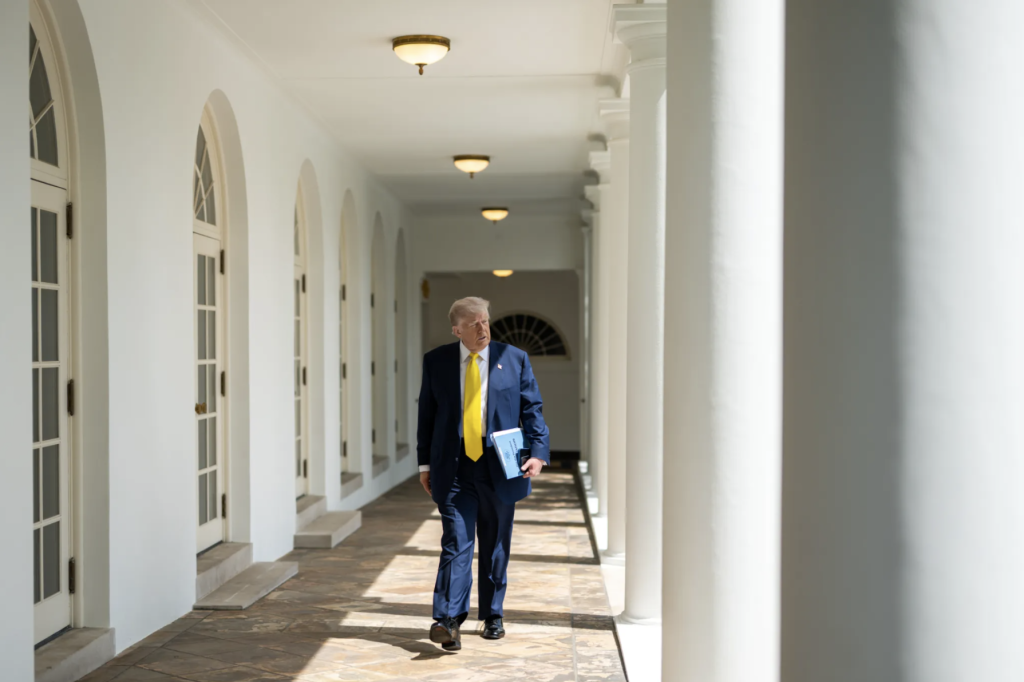
A key turning point came when U.S. President Donald Trump phoned the leaders of both China and Japan. Those two calls fueled widespread speculation in Beijing and Tokyo. Amid the uncertainty, The Wall Street Journal published two reports revealing behind-the-scenes details, including snippets of what was discussed. As expected, both stories quickly became focal points in East Asia.
On November 24, China’s Ministry of Foreign Affairs announced that Trump and Chinese President Xi Jinping had spoken by phone. According to the readout, “Xi elaborated on China’s principled position on the Taiwan question, emphasizing that Taiwan’s return to China is an important part of the postwar international order. China and the United States once fought fascism and militarism side by side and should jointly safeguard the gains of World War II.”
The statement added: “Trump said President Xi is a great leader. Our meeting in Busan was very pleasant, and I fully agree with your views on the bilateral relationship. We are implementing the important consensus reached in Busan. China made major contributions to the victory in World War II, and the United States understands the significance of the Taiwan issue to China.”
Notably, unlike previous readouts of Xi–Trump calls, this one did not state that the Chinese president spoke “at the request” of the U.S. side.
The following day, The Wall Street Journal reported that the call had been initiated by Xi: “The call was initiated by Xi at a time when tensions with Tokyo over Taiwan had escalated.” The White House did not release any statement, but Trump wrote on social media that it had been an “extremely important call” and reaffirmed their intention to exchange visits in 2026.
On the same day, Mao Ning, a spokesperson from the Chinese Foreign Ministry, said during the routine press briefing that the phone call between President Xi Jinping and President Trump was initiated by Trump. She went on to say the call was very important to stable development of Sino-American relations but did not criticize the Wall Street Journal’s reporting as being inaccurate.
As was initially reported by the Japanese media, President Trump called Prime Minister Takaichi shortly after he talked to President Xi on the phone. Speaking at the Kantei, Takaichi told reporters: “President Trump told me that he and I are extremely good friends and that I should call him anytime.” She did not say whether the two had discussed Taiwan.
On November 26, The Wall Street Journal published a report titled “Trump, After Call With China’s Xi, Told Tokyo to Lower the Volume on Taiwan.” According to the article, Trump “suggested she avoid provoking Beijing on the sovereignty issue,” citing Japanese officials and a U.S. source briefed on the call. The reporting emphasized that Trump’s suggestion was gentle and did not amount to pressuring her to retract her earlier remarks.
When asked for comment, the White House provided the Journal with a statement from Trump:
“The United States’ relationship with China is very good, and that’s also very good for Japan, who is our dear and close ally. … In my opinion, President Xi will be substantially upping his purchase of soybean and other farm products, and anything good for our farmers is good for me.”
On November 27, Japan’s Chief Cabinet Secretary Minoru Kihara publicly rejected the Journal’s account, insisting that Trump had not advised Japan to avoid provoking China on sovereignty issues, and that Tokyo had lodged a protest with the newspaper over the “inaccurate reporting.”
Taken together, the trilateral phone diplomacy and the surrounding reporting suggest several preliminary conclusions:
- Beijing was deeply angered by Takaichi’s remarks and applied pressure on multiple fronts.
- China hoped Trump would express displeasure to Tokyo—ideally prompting Takaichi to moderate her stance.
- Trump sought to avoid complications that might disrupt U.S.–China trade negotiations; a gentle warning to Tokyo cost him nothing.
- It is hard to imagine the Wall Street Journal publishing two consecutive inaccurate reports, and the paper has issued no corrections.
President Trump is one of the most transparent and loudest presidents in American history. Every major decision he makes and every grievance he harbors are in his Truth Social account. However, on the occasion of fierce deterioration of China-Japan relations, President Trump seems to have revealed a quiet side. He was using phone calls in an effort to mediate for the sake of closing the trade deal with China. This approach needs to be applauded.
Nearly a month has passed since Takaichi’s initial remarks, and Trump’s phone calls to both sides have done little to ease tensions. On December 1 (U.S. time), China’s Permanent Representative to the United Nations, Fu Cong, sent a letter to UN Secretary-General António Guterres, forcefully rebutting claims made in a November 24 letter from Japan’s UN Ambassador Kazuyuki Yamazaki.
Fu wrote that Tokyo continues to insist it maintains a “consistent position.” China has repeatedly asked Japan to explain what exactly this “consistent position” is, yet Japan has avoided giving a direct answer. “Can Japan clearly and accurately explain to the international community what its ‘consistent position’ on Taiwan truly is?” Fu asked.
On December 2 (Beijing time), Chinese media reported that the Japanese fishing vessel Zuihō Maru had “illegally entered China’s territorial waters near the Diaoyu Islands,” prompting the China Coast Guard to take “necessary control measures and drive it away.”
Why did China react so strongly this time?
For decades, the Taiwan issue has been the central, non-negotiable pillar of Chinese diplomacy—a matter Beijing defines as core national interest, a red line no country is allowed to cross. Takaichi’s statement was therefore perceived as one of the most serious diplomatic provocations China has faced in recent years.
Historical memory also plays a significant role. Japan’s wartime aggression remains deeply ingrained in Chinese public consciousness. As a result, Takaichi’s remarks were read not simply as foreign policy rhetoric, but as a signal of possible Japanese military involvement in what China views as its internal affairs. The comments triggered a wave of nationalist sentiment online, placing enormous pressure on Beijing to respond firmly. Any perceived softness could generate domestic backlash and undermine the government’s long-standing position that Taiwan is a sovereignty issue on which China cannot bend.
Looking ahead, tensions between China and Japan are likely to continue—and may escalate further—as both sides dig in over the political and historical sensitivities surrounding Taiwan.